
After the Ecstasy
Parashat Nasso

In his 2001 book, After the Ecstasy, the Laundry, Jack Kornfield, one of the key teachers of mindfulness meditation in the United States, addresses the all-too-human predicament: What do we do the day after a peak, life-changing experience?
Enlightenment does exist. It is possible to awaken. Unbounded freedom and joy, oneness with the Divine, awakening into a state of timeless grace — these experiences are more common that you know, and not far away. There is one further truth, however. They don’t last. Our realizations and awakenings show us the reality of the world, and they bring transformation, but they pass. [1]
Sometimes it’s the day after a major lifecycle event like a wedding, a b-mitzvah, or a graduation. Maybe our favorite team has won the championship! Or maybe we’ve been on retreat or attended a workshop with a distinguished and inspiring teacher. During these times there is the depth of an experience, perhaps the exuberance of a celebration. But eventually it’s time to “descend the mountain,” to return to our lives and re-engage with the mundane concerns of every day existence. Yet we know that something essential has changed for us.
While we can’t stay in a constant state of ecstasy — and the attempts to try usually lead us to trouble — we can bring back a physical object — or a chant or mantra — that reminds us of what the peak experience felt like, keeping it close while we attend to the mundane routines of our lives.
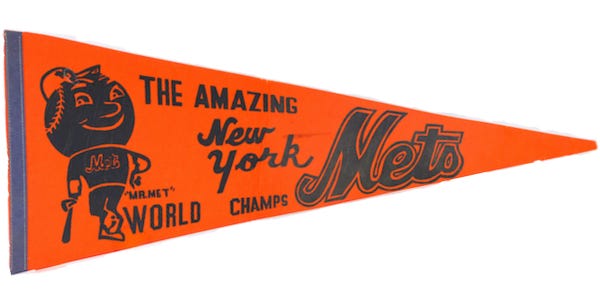
Sometimes there are obvious physical artifacts of transformation. A wedding ring, for example, can be a reminder, every time we look at our hand, of a peak experience that has transformed a relationship and our identity in the community. Another example: the New York Mets banner on my wall doesn’t just signal my allegiance to a baseball team, but also evokes the feeling I had as a nine-year-old when my team, the Amazin’ Mets, won the World Series. With that banner I can revive that feeling of joy from all those years ago.
The Children of Israel in our story are still camped at the foot of Mount Sinai, making the final preparations for setting out into the wilderness, toward the Promised Land. Last week‘s Torah portion, the special reading for the festival of Shavuot, was a re-reading of a section of the book of Exodus: the revelation that took place a year earlier, when there was smoke and the resounding voice of God. It was a peak experience of enlightenment, which our tradition teaches was not just for the people in the story, but for all of us, for all time — as if we, ourselves, were all present for the revelation at Sinai. In re-reading this chapter on Shavuot, after an all-night study and preparation session, we are primed to receive revelation alongside the characters in the story, to open to that “state of timeless grace.”
And now the festival is over and regular routines resume. What can we — along with the Children of Israel — carry with us, to help us keep in touch with the awesomeness of the revelation experience?
Tucked into this week’s Torah portion, Nasso, the final chapters of narrative before the people finally set out, are several lines of blessing that have, over thousands of years, served to maintain connection to the peak experience at Sinai, both for the people in the story, while traveling through the wilderness, immersed in the daily needs of survival, and for us, here, today.
The priestly blessing:
יְבָרֶכְךָ יְהֹוָה וְיִשְׁמְרֶךָ׃ יָאֵר יְהֹוָה פָּנָיו אֵלֶיךָ וִיחֻנֶּךָּ׃ יִשָּׂא יְהֹוָה פָּנָיו אֵלֶיךָ וְיָשֵׂם לְךָ שָׁלוֹם׃
GOD bless you and protect you!
GOD deal kindly and graciously with you!
GOD bestow favor upon you and grant you peace!
— Numbers 6:24-26
These three short lines comprise the oldest known biblical text: amulets with these verses written on them have been found in graves at Ketef Hinnom, dating from the First Temple Period, most likely predating the Book of Numbers by centuries. [2] The practice of physically wearing God’s name and blessing on an amulet is evidence of their use in the everyday lives of Israelites.
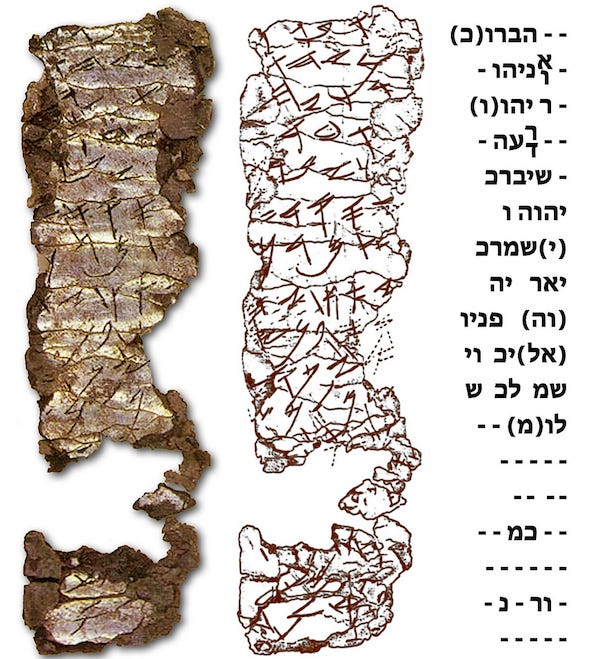
After gathering for the pilgrimage festival (Passover, Shavuot, Sukkot) and hearing the priests recite the blessing at the Temple in Jerusalem, the amulet kept the peak experience of being at the Temple close after one returned home and is “doing the laundry.” Today, these lines are deeply woven into the ritual practice of Judaism — part of the daily and festival liturgies, as well as a blessing of children on Shabbat eve. And when we hear them and recite them, they bring us near to the revelation experience.
The decision of the redactors of the Torah text to place these ancient lines of blessing in exactly this place speaks to how our sages may have appreciated the power with which these words already served our ancestors. Thus were they chosen to be the ideal artifact in the story, to accompany the people on their journey. Their placement in this parasha, which is most often read just after Shavuot, is a thread connecting us to the ecstasy of Sinai even when we are no longer physically at the mountain, the source of enlightenment.
Sources:
[1] https://archive.org/details/afterecstasylaun0000korn/mode/2up